
Like many others, I tuned in to “Quiet on Set,”, which revealed the hidden abuse of child stars behind the scenes. This series, particularly resonant with those of us who grew up in the ’90s, prompted a profound reevaluation of the shows from our youth. The recent revelations about “America’s Dad” and other beloved public figures have been shocking, exposing them as predators and casting a shadow over our entertainment icons.
The realization that numerous adults were present during those times yet remained silent—or worse, silenced those who spoke out—is staggering. The documentary was an eye-opener for me.
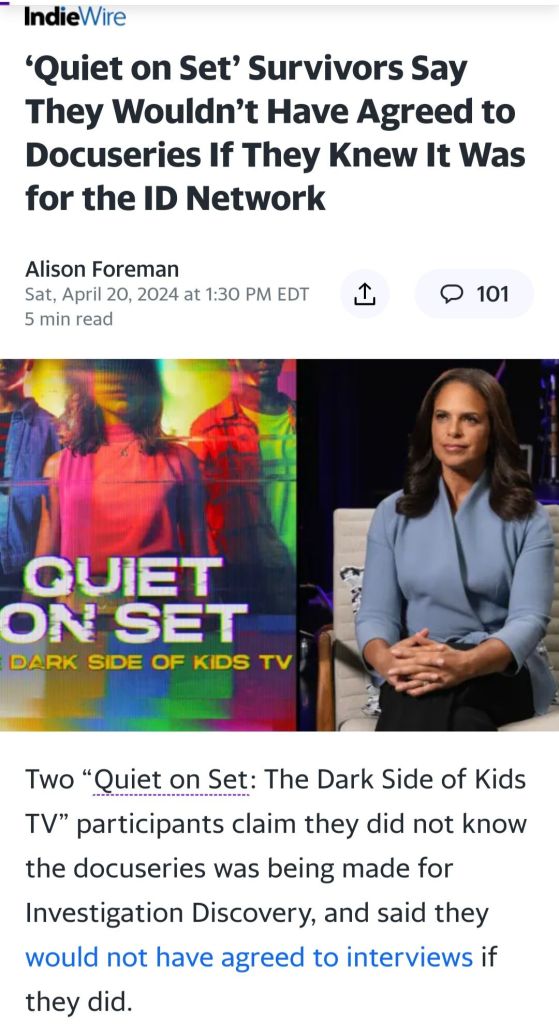
However, this morning, an article caught my attention. It discussed the discontent among some cast members of “Quiet on Set” regarding the lack of communication about the series airing on ID Network. A few are now expressing regret, stating that had they known it would be aired on ID, they would have declined to participate. They worry that their stories, and the gravity of the issues they raise, may not be receiving the serious consideration they warrant.
I’m perplexed by the weight given to the network broadcasting our stories. Whether it’s the investigative lens of “2020” or the crime-focused gaze of Investigation Discovery, isn’t the essence that the narrative is conveyed with fidelity? If the harrowing journeys and the shadows of abuse endured by the victims are brought to light, why does the channel of delivery stir such debate? For the regular ID audience, who are connoisseurs of crime and inquiry, the platform should not dilute the potency of the message, but rather serve as a conduit for the voices that demand to be heard.
To quote Alexa Nikola, she states:
“We have to live with our stories and how they were treated by ID and Maxine forever while they see it as leverage for future projects…. There’s nothing bingeable about trauma.”
Yet, my perspective diverges. In the tapestry of today’s society, it is the threads of sensationalism, horror, and trauma that enthrall the masses. This voracious appetite for the macabre is what dominates the zeitgeist. It’s a melancholic reflection that the integrity of these stories may be under scrutiny, doubted perhaps by viewers, or even the very individuals who bared their souls. It’s the underlying dread that their confessions might be dismissed. However, contrary to their fears, the world has indeed taken notice.
As the final credits of “Quiet on Set” roll, the echoes of the revelations linger in the minds of viewers. The series, a tapestry woven with threads of courage and vulnerability, leaves an indelible mark on the collective memory of a generation. It stands as a testament to the resilience of those who endured, and a call to action for an industry in dire need of reform. While the platform of its unveiling—ID Network—may be debated, the imperative message it conveys transcends boundaries, urging us to listen more intently and advocate more fiercely for the silent voices that have only just begun to speak.
 Natal Galvan
You must be logged in to post a comment.