
Reconstructing the Looking Glass

In the whimsical dance of life, I’ve found solace in the serendipitous wisdom of self-help books. Rather than a linear journey from cover to cover, I let fate guide my hand to a page that whispers just what my soul needs to hear. On a day kissed by destiny, I cradled “The Art of Possibility” by Rosamund and Benjamin Zander in my hands. It was page 42 that caught my eye, where Rosamund muses on the art of remolding the past:

“How often do we stand convinced of the truth of our early memories, forgetting that they are but assessments made by a child? We can replace the narratives that hold us back by inventing wiser stories free from childish fears, and in doing so disperse long held psychological stumbling blocks.”

This passage is a beacon, illuminating the profound influence of perception and our sovereign right to redraw the contours of our personal tales. The Zanders assert that the fabric of our existence is spun from the yarns we narrate to ourselves and absorb from others. By rethreading these yarns, we possess the alchemy to transform our view of life and the tapestry of our connections.

This resonated with me profoundly, as mere days prior to reading this, I was enveloped in the warmth of my mother and visiting aunts from Colombia. Amidst a symphony of laughter and the spirited flow of aguardiente, confessions and lessons from their lives unfurled like vibrant threads. Each shared their own saga of clandestine escapades, with no remorse for the masquerades necessary to guard their secrets.

As the day unfolded, family lore long concealed began to emerge, like specters stepping out for a promenade. The revelations about my parents soon followed. I discovered truths that had been veiled from my childhood gaze, piecing together the mosaic of my upbringing.

A melancholy tide now washes over me. In those shared moments, I saw my father not as an enigma, but as flesh and blood, flawed and real. The very kin who harbored their own secrets were quick to cast stones at what I once believed was an unblemished fortress of love, my dad. My adoration for my father was unwavering, yet I was led to see him as a beast. He was no beast; he was simply human.

I harbor no rage when I ponder these revelations. Might my bond with my father have flourished differently if his image hadn’t been tarnished by others’ unchecked emotions? If they had shielded me from the complexities, rather than painting him as a villain?

Revisiting the past holds a sacred significance for me now. With the wisdom of adulthood, I perceive life through a lens refined by my own experiences. It’s a curious thing; I once prided myself on being open-minded, and perhaps I was, in some respects. Yet, as I’ve journeyed and adventured, my consciousness has blossomed further.

The anniversary of his departure looms on the horizon. For the first time, I can honor his memory with tears of love, not sorrow. Some might say it’s too late, his absence a barrier. But I disagree. I’ve been graced with the insight and maturity to understand what was once beyond my grasp. This is tranquility, a gift I never anticipated. I cherish this newfound closure and embrace the evolution of our bond.
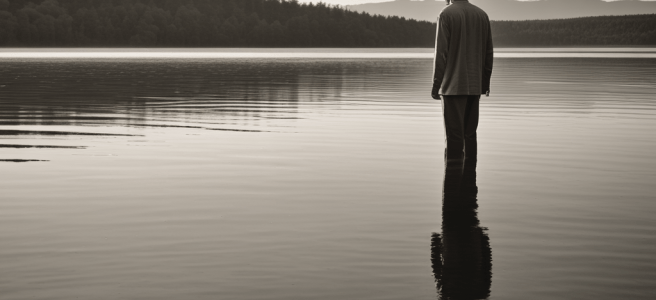
The Double Standard of Forgiveness: Family Dynamics

As time marches on, I find myself enveloped in the complexities of adult hypocrisy. It’s a thick fog that seems to cloud judgment and warp reality to suit one’s own narrative. Growing older has peeled back the curtain to reveal a truth that’s both liberating and unsettling: adults don’t always hold the answers. They, too, are improvising through life’s unpredictable script, their actions becoming more transparent and unapologetic with age.

This realization hits hardest when I consider the relationship I had with my father—a relationship marred by the tainted perspectives handed down by the very adults who claimed to guide me. They warned me of his flaws, painting a picture of a man I should guard my heart against. Yet, as the years stack up, I see that those same adults were guilty of similar, if not identical, transgressions.

The struggle I face isn’t with the loss of my father or the strained ties that bound us. Such narratives are not unique in the tapestry of human experience. My battle lies in the newfound knowledge that my mother’s side of the family, once perceived as the bastion of virtue, was equally flawed. They committed the same mistakes they implored me to neither forgive nor forget in my father.

The judgment, the half-truths, and the outright omissions of fact—it’s a mire of deceit that begs the question: How could they stand so firmly in their righteousness while casting my father as the perennial villain? He was condemned for his humanity, for his errors, and when he stumbled, there was no hand to help him up. We broke him, collectively and remorselessly, without a backward glance.

In this reflection, I grapple not with forgiveness but with understanding. The double standard of absolving a mother while vilifying a father speaks volumes about the selective nature of our grace. It’s a poignant reminder that in the end, we are all fallible beings, navigating the murky waters of life’s choices and consequences.

Is there a simmering anger within me? Undoubtedly, yes. For 37 years, I navigated life under the impression that my father was a man to be scorned, when in truth, he was merely human. The narrative I was fed—that his errors were unforgivable—shaped me into who I am today. Now, I can’t help but ponder if I might have been different without that influence.

Life’s rich tapestry, observed through the actions of others and the wisdom gleaned from countless books, has broadened my understanding of the human condition. Yet, the lens through which I view life and people has been irrevocably colored by the strife between my mother and father.

I believe he’s out there, somewhere, with a newfound comprehension of my thoughts and emotions—a connection we lacked in life. And in this belief, I find peace, knowing he’s aware of my forgiveness. After all, what I once thought needed absolution was nothing more than the ordinary failings of a man.

As I forge my path, I carry with me the lessons of this dichotomy, hoping to break the cycle of hypocrisy for the generations to come. It’s a journey toward a more compassionate and equitable understanding of forgiveness, where the scales of judgment are balanced, and every soul is given the chance to rise from their missteps.

Yes We Are And This Is Why

I was apart of a very interesting conversation not too long ago which included my boyfriend and one of his good friends.  They were speaking of the best method to clean car headlights.

“Bro, all you have to do is spray your headlights with OFF bug spray and bam! They’re clean!”

“Yeah, you told me that but when I looked it up it said that it doesn’t last very long. It’s a short term fix. I’m just going to buy the special kit and clean them. I can clean yours too babe.” My boyfriend smiles, turning his attention from his friend to where I was sitting.

“Awe, I appreciate that! But don’t worry, I can just do it.” The statement spilled from my lips without a second’s thought. It has always been natural for me to do things on my own. For one thing, I’ve never liked to burden others with tedious duties, especially if it’s something I could easily just do my self. Plus, I’ve always been one to just take care of things on my own. Not so much because I want to but because I’ve been conditioned to. My boyfriend’s friend, who I just met a couple months ago, wouldn’t have a clue as to the reasoning of my reaction though and he quickly starts to lay it on thick…

“Lord.. all you women now-a-days are so independent! Can’t you girls just let us do things for you? I mean, it’s because we actually like to do things for you. It’s how we show that we care, seriously…”

He is not the only man to feel this way. I feel as though the majority of men see women as wanting to be Miss. Independent, yet to be honest, I don’t think it is so much of us wanting to be independent as it is that we have been conditioned to be this way.

My generation is the generation of the baby boomer parents. Baby boomers are the generation to have really started a new trend in parenting, instilling different values and ways of life. Whether you were married and then divorced, raising children that way, or never married to begin with and having children out of wedlock, one of the major lessons taught, be it beaten into you or subconsciously taught, was the lesson of being independent. Doing for yourself so you would never have to solely depend on others. This lesson being especially directed towards females. Men were always raised as being the “men of the house”. Families have always depended on men to bring home food, to help build and maintain shelter and order. Men were always looked as the bosses, the ones who truly ran the household. It has only been in the last 50 years or so that women have begun a new sort of revolution with what they wanted their contributions to be. More freedom to choose what, where, when, and who when it came to decisions to be made in their lives. Even women who have been in a loving marriage for decades will say that they wish a sort of different life for their daughters, one with more leeway to do what they want to do and without having to depend on anyone other than themselves.

My parents divorced when I was 4 years old. At that time, my mother had depended on my father so much that she didn’t even know to fill out a personal check on her own. She had been so utterly dependent on my father that when they split up, she felt as if she had been thrown into a world she knew nothing of. It was a struggle for her to get back on her feet and succeed as a single mother of two young girls. Her mantra always was, “Do for yourself. Depend on no man. You are all you need.” and as a kid, watching and observing, I took this in and applied it to my life. Before I knew it, it was my life.

I am no extreme feminist by any means. Yet, I do understand the thoughts behind those that are, just as I understand the frustrations plaguing men when it comes to the evolution of women and the roles men now play in their lives. But as it is a struggle for men to adapt to a woman’s newly found independence, it is also a struggle for women to find a middle ground with wanting to be independent while also allowing room for someone else to help take care of you. It is a small battle that presents itself regularly in life. One that I don’t ever see being won by either party but one that can be a bit more manageable.

For me it is a struggle to let go of the reigns a bit and allow for someone else to take on  more than what I am used to giving up. I have to remind myself that yes, although I am very independent, I also have to allow others who love me to do things for me, not because I can’t do them myself but because for them, it’s a way to show that they care. It takes effort and awareness to be able to allow for this to happen but it’s a challenge worth accepting if it means bringing a bit of joy into someone else’s life. I hope that for the women who read this post it allows for you to take a step back, however slight that step may be, in order to allow someone else to do for you. Allow them to care for you in ways that they would like to express. Give them that chance to express. I also hope that for the men who read this you may now understand that maybe it isn’t so much that we hate your help. It is that we have grown into independence and truly know nothing else.